



Human papillomavirus is one of the most common diseases against which no one is immune.According to medical statistics published by the World Health Organization, about 70% of the world's population is infected with HPV, and the majority of infected people do not even know they have the disease.Despite long-term research into the nature of the papillomavirus, scientists have not yet found a way to completely cure it.Today, it is only possible to suppress the activity of the causative agent of the disease, but as a result of certain unfavorable factors, it returns with renewed force.
Ways of HPV infection
The papillomavirus is an unpleasant disease that causes the appearance of genital warts (condylomas), skin growths, and papillomas on the mucous membrane of the larynx and oral cavity.In fact, HPV in itself does not pose a particular threat to human health, but its external symptoms worsen the appearance, cause pain in case of damage, and can even cause oncology.Due to the risk of malignancy, this disease must be treated immediately, otherwise the consequences will be irreversible.

Human papillomavirus infection spreads very quickly.It mainly spreads in utero during pregnancy (from mother to child) or through contact:
- through a handshake;
- embrace;
- when touching the patient on public transport;
- during sexual contact with an infected person.
In second place is the household circle.In this case, you can catch the virus:
- through animal fur;
- when using other people's personal hygiene items;
- if you wear the clothes or shoes of an infected person;
- during visits to public pools, lakes, and showers.
HPV activation does not occur immediately.It often happens that the disease makes itself felt one or two years after entering the body, or does not appear at all.If no external symptoms are detected, then the person infected with the papillomavirus will be in the group of carriers and will spread the disease.In the absence of external signs, this infection can only be detected after laboratory diagnostics, but few people think about it until the disease enters its active phase.
It is an interesting fact that the external signs of the disease in pregnant women are temporary.The reason for this lies in the fact that the mother's immune system weakens during pregnancy, which previously kept the infection in a latent form.After childbirth, the protective functions of the woman's body are restored and the disease goes away by itself.
Papilloma virus: level of oncogenicity and types of growth
All existing types of papillomavirus can be divided into several categories depending on the level of oncogenicity:
- safe increments;
- tumors that have a low chance of cancerous transformation;
- papillomas with an average risk of developing cancerous tumors;
- particularly dangerous tumors.
Based on data from medical practice, particularly dangerous types of papillomavirus affect the female body in most cases (70-94%).In urology and gynecology, it causes precancerous conditions such as cervical cancer.
Types of papillomas
According to their appearance and location, all papillomas can be divided into several groups:
- warts– soles on the feet, vulgar on the fingers, youthful (flat) growths on the skin;
- genital warts– genitals, around the anus, mucous membrane in the vagina, oral cavity, lips.
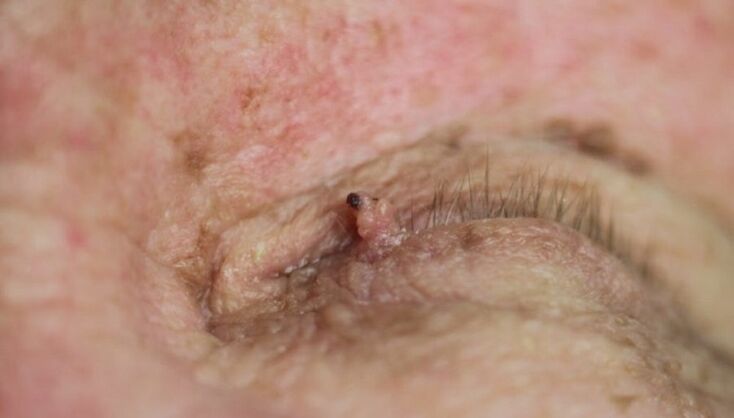
In addition, tumors can develop on the vocal cords.In this case, the disease is called laryngeal papillomatosis.It is often diagnosed in newborns and women with condylomatosis.
Important!
If you do not consult a doctor in time, the papillomavirus can reach an advanced stage, and a person will develop many different growths of different levels of oncogenicity throughout the body.It will be very difficult to fight mass papillomas.
Diagnosis of the disease
If you notice signs of papillomavirus on the skin, contact an infectious disease specialist or dermatologist immediately.If growths appear on the genitals, the patient should see a gynecologist (for women) or a urologist (for men).The doctor is obliged to perform a visual examination and establish a primary diagnosis.After that, the patient is sent for examination.This is a mandatory procedure, since in addition to HPV, there are many other diseases whose external symptoms are very similar to the signs of papillomavirus infection.
PCR analysis
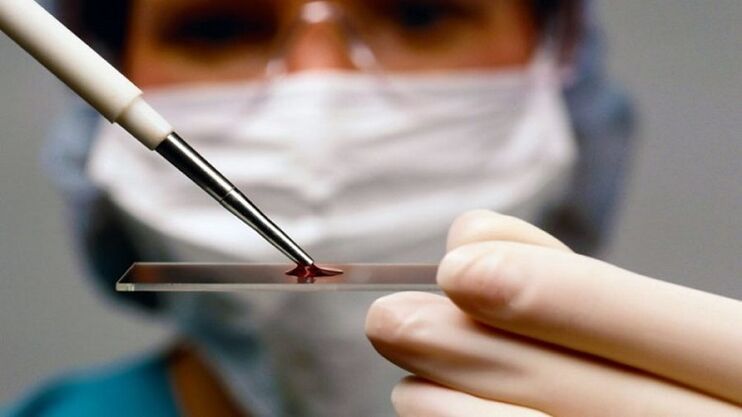
Polymerase chain reaction (PCR) is the most common laboratory diagnostic method.Blood, skin scrapings or genital mucosa are used as biomaterials.
After taking a sample from the patient's tissue, the laboratory staff uses special enzymes that copy the RNA and DNA particles of the human papillomavirus from the biomaterial.They are then “run” through the infectious disease database, identifying the type and concentration of infection.
There are several reasons why PCR analysis is the main method for diagnosing papillomavirus.Among them, it is worth highlighting the main advantages of this method:
- increased sensitivity - the disease can be detected immediately after entering the body;
- versatility – absolutely all biomaterials are suitable for analysis;
- large coverage area - allows identification of all types of HPV that are present in the body at the same time;
- the speed of the analysis - the results become known within a few hours;
- high accuracy - the technique never gives incorrect results (exceptions include violations of the technology for the implementation of diagnostic measures, which is extremely rare).
In addition, it should be noted that the cost of the analysis is acceptable.The price of PCR is much lower than other methods of HPV diagnosis.
Digene HPV test
Not long ago, the Digene technology appeared in medicine, with which all types of human papillomavirus infections, from low oncogenicity to particularly dangerous types of the disease, can be detected.Although this technique is new, it is quickly gaining popularity.For example, in European countries it has already been recognized that it is more effective than PCR analysis.
The main advantage of the Digene HPV test is that, unlike PCR, it can not only identify the papillomavirus and determine the type of disease, but also determine the level of its oncogenicity.Thanks to this, the doctor can choose the treatment more precisely and minimizes the probability of developing cancer caused by HPV.
A secondary positive feature of the diagnostic method is the precise determination of the concentration of virus cells in the body.When deciphering the tests, doctors pay attention to this characteristic, since they choose the course of therapy based on this.
All methods of treatment of human papillomavirus
HPV is not a death sentence!It is impossible to completely get rid of it, but it is quite possible to start living without its external manifestations.
The treatment regimen for human papillomavirus infection consists of three stages:
- Removal of external signs (growths) of the disease;
- Completion of a drug therapy course;
- Strengthening the immune system to prevent relapse.
The entire healing process of HPV must be done under the supervision of a doctor.Making the changes yourself can cause health problems or reduce the effectiveness of medications prescribed by a professional.
Important!
Doctors allow the independent use of additional methods of fighting the virus (traditional medicine, spells, spas), but the doctor must be notified before using them.
Basic methods of removing growths
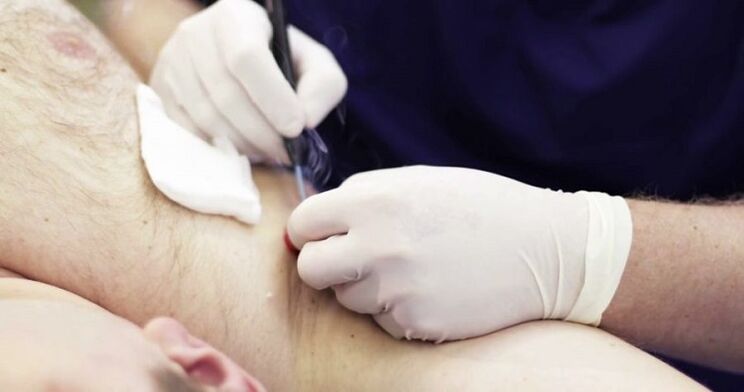
It is not recommended to remove the growth independently, since any damage to the papilloma or condyloma can provoke the transformation of the remnants of the neoplasm into cancerous tumors.In order to safely get rid of the external symptoms of infection, professional techniques must be used:
- freezing with liquid nitrogen;
- destruction of radio waves;
- electrocoagulation;
- laser therapy.
General contraindications for hardware removal of papillomas are as follows:
- the presence of chronic diseases that are in an acute stage at the time of the visit to the medical center;
- damage to the skin at the site of growth;
- suspicion of malignancy of the neoplasm;
- skin infections.
Additionally, a client may be denied surgery if they are under the influence of drugs or intoxicated.
Excision of the growth with a scalpel
In some particularly advanced cases, the patient must seek the help of a surgeon.This radical method of combating growths is prescribed only if the papilloma has grown by more than 4-5 cm or the person has contraindications to one or another cosmetic procedure.
Surgical intervention is the only effective way to get rid of large warts and large group tumors.Its disadvantages were:
- the appearance of a scar after surgery;
- the need for anesthesia (local or general);
- long rehabilitation period.
Chemotherapy
If there is a small single papilloma, the patient can use chemotherapy.It is based on the use of drugs for external use that penetrate the deep layers of the epidermis and destroy the basis of growth.As a result, under the influence of aggressive chemical compounds, it dies and falls off, leaving behind a barely noticeable depression.

The disadvantage of this treatment method is that the components of anti-papilloma products also burn healthy skin cells.In addition, chemotherapy cannot remove condylomas and warts located in the mouth or genitals due to the risk of damaging the mucous membrane.
Course of drug treatment
To this day, it is not known how to cure the papillomavirus forever.The effect of all existing anti-HPV drugs is aimed at suppressing the activity of the infection and strengthening the immune system, which can independently block the development of the disease.
Complex drug therapy includes several drugs:
- antiviral;
- immunostimulants;
Antiviral drugs stop the infection from developing, and immunostimulants strengthen the body's defense functions, which then keep the disease in a latent state.
The choice of a particular drug depends on the individual characteristics of the patient's body.
Injections have become an alternative to oral medications.
Strengthening the immune system
Unlike antiviral and immunostimulating drugs, vitamin complexes can be selected according to the patient's personal preferences.They do not form the basis of therapy and belong to tools intended to support the human body in the fight against infections.
Important!
If desired, tablet vitamins can be replaced with healthy foods.To compensate for the body's lack of nutrients and to restore its protective functions, it is sufficient to switch to plant foods rich in vitamins E, C, and D.
Prevention of papillomavirus
There are several groups into which all existing preventive measures against papillomavirus are divided:
- prevention of infection, taking into account the way the infection spreads (primary prevention);
- early diagnosis of the disease;
- protects the body from re-infection after a therapeutic course.
In the first case, a person must protect himself from infection in every possible way.For this you will need:
- stop having free sex;
- wash hands after visiting public places;
- observe personal hygiene;
- avoid visiting dubious beauty salons (precisely due to insufficient disinfection of cosmetic or manicure tools, the probability of papillomavirus infection in the beautician's office is quite high);
- eat well;
- wear shoes when visiting swimming pools or spas;
- strengthen your immune system;
- Clean your home regularly.
Despite following the recommendations, the chance of HPV infection remains small.Therefore, doctors insist on regular visits to an infectious disease specialist and the submission of biological material for analysis.This helps to identify the virus during the incubation period and get rid of it quickly.
If, nevertheless, an infection occurs and the disease manifests itself externally, no preventive measures will be beneficial.Here, only specially selected treatment will help, after which you need to take care of preventing the relapse of the disease.To do this, you need to apply the rules of primary prevention and stay under the supervision of a doctor for another 2-3 weeks.
Does the HPV vaccine protect women?
Despite the fact that there is no 100% cure for papillomavirus, women can avoid infection with some types of the disease that are dangerous for cancer.Two drugs have been developed for this purpose.
These drugs are given as an injection solution and help protect the body against several types of HPV (6, 11, 16, 18, 33, 45).
Vaccination with these devices takes place in three stages:
- The first dose is on the day of the injection;
- Second dose – after 60 days;
- The third dose six months later.
After vaccination, the body acquires the ability to destroy viral cells whose DNA was part of the drug, provided that the person was not previously infected with them.Therefore, before the administration of the drug, a woman undergoes mandatory laboratory diagnostics.
In order for the immunity to be as pronounced as possible, the vaccination should be carried out before the age of 18.Some developed countries have made this procedure mandatory and all high school students undergo it.
If necessary, you can use the paid vaccination at a private clinic.